The Counter Guy Knew My Name
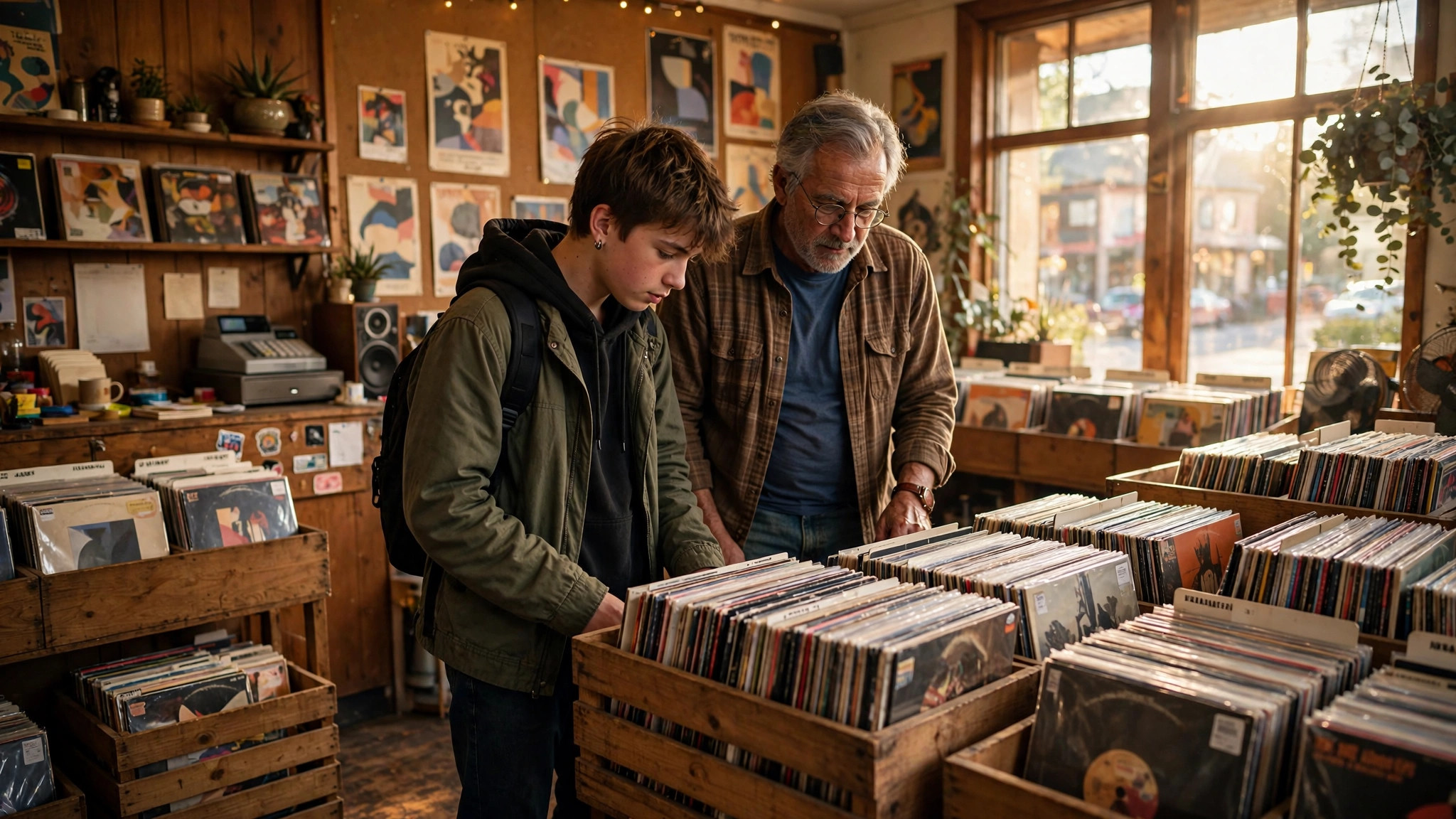
I walked into a record store a while back, in a town small enough that the water tower is the skyline. The man behind the counter looked up and said, "We got a used copy of that live album you asked about in March." March. I had mentioned it once, in passing, while buying something else.
No algorithm has ever done that for me. My streaming service has heard me play the same forty records for years and still introduces me to music like we have never met. The counter guy remembered a sentence from four months ago because that is the entire business model: he is not selling plastic discs. He is running a memory for the town's ears.
I walked out with the album and a second one he put in my hand with the review "trust me." He was right, by the way. He is always right. That is why the store survives in a world where every song ever recorded fits in my pocket for free.

What Actually Happens in That Room
Watch a record store on a Saturday for an hour and you will see the real inventory. A kid of fourteen flips through the bins with the seriousness of a surgeon, building an identity one discovery at a time. A grandfather buys the same record he owned at her age, for her. Two strangers argue, cheerfully, about which pressing sounds better, and leave as something closer to friends.
Music is one of the last excuses adults have to talk to each other about joy. Sports talk divides. Politics talk divides faster. But "have you heard this" is an invitation almost nobody refuses. The record store is the building where that conversation has a home address.
It is also one of the few retail rooms left where browsing is the point. Nobody goes to a record store with a list and a stopwatch. You go to wander. You go to be surprised by a cover, a recommendation, a song leaking out of the shop speakers that stops you mid-step. Every other store in town is optimized to get you out faster. This one is optimized to keep you.
What a Town Loses When It Closes
When the last record store in a town closes, the announcement always says a business failed. That is the smallest part of the story.
The teenagers lose the one commercial room that treated their taste like it mattered, at the exact age when being taken seriously about something is oxygen. The musicians lose the bulletin board, the gig flyers, the guy who would stock a local band's record next to the famous names like it belonged there, because to him it did.
And everyone loses a crossroads. Towns run on weak connections: the people you nod at, the faces you know from somewhere. Those nods are load-bearing. They are why somebody checks on your house when you are away and why the fundraiser hits its goal. Record stores manufacture those connections out of thin air and shared choruses, week after week, for the price of a used album.
I sell software for a living. My entire job is helping businesses run on systems instead of shoeboxes. So believe me when I say the record store is the one operation in town I never want to see optimized. Its inefficiency is its function. The conversation is the product. The record is just the receipt.
For the Kids, Mostly
My son is nine. His world arrives through a screen, instant and infinite and gone the moment he swipes. I watch what happens to kids in a record store and it is different in a way that matters. The music has weight. You carry it home. You read every word on the sleeve because the sleeve is all there is. You play the whole album, in order, the way somebody meant it, because skipping costs effort and the effort teaches you patience you did not know you were learning.
My daughter is in eighth grade, building her taste right now out of whatever the world hands her. I would rather some of it be handed to her by a counter guy who remembers names than by a feed that remembers nothing but what kept her scrolling.
A town that keeps a record store is telling its kids that culture is a physical thing, made by people, kept in rooms, passed hand to hand. That is not nostalgia. That is curriculum.
The Point
Not every town can support a record store, and sentiment will not pay a lease. I know what a P&L looks like. But when one survives, it is worth understanding what you actually have, because it is more than a shop.
You have a room where the generations mix on purpose. A memory that works for free. A place where your town's story about itself gets told one recommendation at a time. Buy the record there, even when the stream is easier. Especially when the stream is easier. You are not paying for the song. You are paying the rent on the room.
Frequently Asked Questions
Aren't record stores just nostalgia for people who grew up with vinyl?
Some of it is nostalgia, sure. But walk into one on a Saturday and count the teenagers. Vinyl has been the format young music fans actually buy for years now, and plenty of them never lived in a world without streaming. They are not pretending it is 1974. They want the ritual, the object, and the room. That is not nostalgia. That is a preference.
Can a record store really make money in a small town?
The ones that survive treat the store as a hub, not a warehouse. Used records carry the margins, new releases carry the foot traffic, and the events, turntable setup help, and special orders carry the loyalty. It is not an easy business. Neither is any business worth having on a main street.
What if our town doesn't have one?
Then somebody's kid with good taste and stubbornness is your best hope, and the town can help: shop there when it opens, bring your old records in for trade, show up to the listening nights. Stores like that run on regulars. Be one.
I stream everything. Why should I care?
Because the store is not competing with your stream. It is doing a different job: giving your town a place where music is social, physical, and passed between people. You can stream all week and still spend one Saturday a month keeping that room alive. Most people who try it find out it was for them, too.