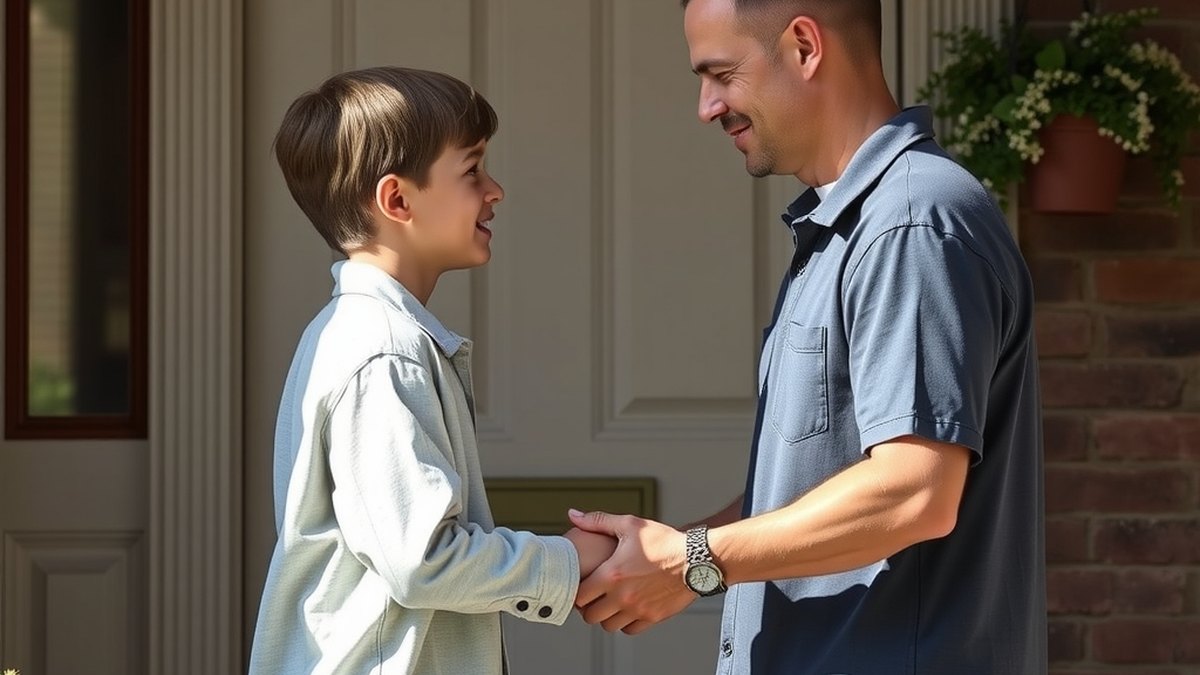
Nobody Taught Me This Growing Up
I do not remember anybody teaching me to shake hands. I remember learning that I was doing it wrong, which is a different and much more expensive education. Early in my sales career I walked into rooms with a handshake like a dead fish and a habit of looking at the floor when I said my name. I thought the pitch was the thing. I thought the deck was the thing. I had no idea that the deal, or at least the chance at the deal, was getting decided in the first four seconds, in the doorway, before a single word about business got said.
A mentor finally pulled me aside after a meeting and told me the truth in the way mentors do, which is to say bluntly and in front of my own embarrassment. He said, "Dave, you shake hands like you are apologizing for taking up space." I went home and practiced on a doorframe like a lunatic. It worked, eventually. That is the part I keep coming back to now that I have a son: everything I know about walking into a room, I learned late, in public, at full price. He gets to learn it at nine, in the driveway, for free.
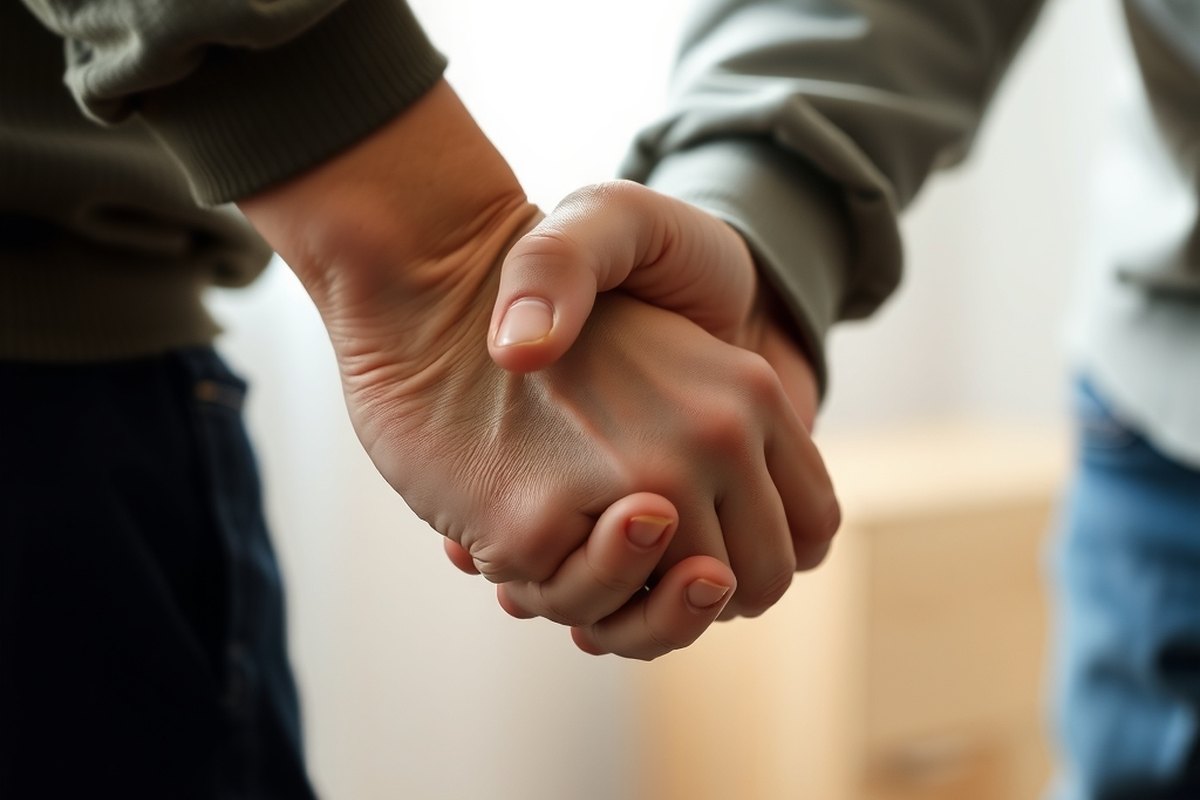
The Four Parts of a Real Handshake
Here is the whole curriculum, because it fits on an index card. Stand up if you are sitting, because a handshake from a chair is a surrender. Eyes on the other person's eyes, not their shoes. Grip firm, not a wrestling match and not a wet noodle, about the pressure you would use to hold a full cup of coffee you do not want to spill. And say your name like it is good news. "I'm David." Not mumbled. Not a question. A statement.
We practice in the moments that are already there. The neighbor at the mailbox. The coach after practice. A buddy's dad at the football field. I am not running drills like some handshake boot camp in the kitchen. Life provides reps every single day if a kid knows what to do with them. The first few tries were all elbows and giggling. The grip was either a vice or a ghost. But kids learn body things fast, the way they learn to throw a spiral. Muscle first, meaning later. The meaning shows up on its own schedule, usually in the car on the way home, when he asks me why grown-ups care so much about something so small.
This is the kind of work I do on the business development side.
What a Handshake Actually Says
Here is what I told him, and it is the same thing I would tell anybody I train in sales. A handshake is the first promise you make to a person. It says: I am here, I see you, and I am not afraid of this moment. People decide whether they trust you in pieces, and this is piece number one. Get it right and everything after it gets easier. Get it wrong and you spend the whole conversation climbing out of a hole you dug in the doorway.
I have watched it from the other side of the table for years now. I run sales for a living, I have sat through thousands of first meetings, and I can tell within one handshake whether the person across from me believes in what they are about to say. Not whether the product is good. Whether they believe it is. The ones who walk in steady are not always the ones with the best offer, but they are always the ones who get heard out to the end. My son does not need to know any of that yet. He just needs the habit in his hand before the world starts grading him on it.
The Part Where He Teaches Me
The funny thing about teaching a kid confidence is that kids have not yet learned to be afraid of the things we are afraid of. Nobody has told my son yet that walking up to a stranger is supposed to be scary. So he walks up to people the way he walks up to everything: directly, at full speed, slightly sticky from whatever he last ate. Last month he introduced himself to a man I have nodded at for two years without ever learning his name. Two years of polite driveway waves, and my nine-year-old closed the gap in four seconds with his hand out.
That is the lesson that landed on me. Adults build whole systems to avoid the vulnerability of a first hello. We send emails instead of knocking. We text instead of calling. We let opportunities die of politeness. Then a kid who has not learned the fear yet just walks over and does the thing. Teaching him the handshake was supposed to be me handing something down. Half of it is him handing something back: the reminder that most doors in life are not locked, they are just closed, and a closed door opens for the person willing to walk up and knock like they belong there.
He is nine. He has years of doorways ahead of him: classrooms, locker rooms, job interviews, first dates, rooms I will never see. I cannot walk into any of those rooms for him. But I can put this one small thing in his hand now, while the stakes are a neighbor and a mailbox, so that when the rooms get bigger the first four seconds are already his.
More from me on the Dead Brands blog, new posts every weekday.
Frequently Asked Questions
At what age should a kid learn to shake hands?
As soon as they are meeting adults regularly, which for most kids is grade school. Nine is a sweet spot: old enough to understand the why, young enough that it becomes habit instead of performance. Start with family and coaches, where the reps are safe and the feedback is kind.
What if my kid is shy?
Then the handshake is even more valuable, because it gives a shy kid a script. Shyness gets worse in unstructured moments; a four-step routine (stand, look, grip, name) turns a scary blank moment into a job they know how to do. Keep the reps short and frequent instead of making it a production.
Is the handshake still relevant in a world of texts and video calls?
More than it used to be, honestly. When most first contact is a screen, the person who shows up in person and connects like a human stands out. The handshake is not about the hand. It is about being present, and presence is getting rarer and more valuable every year.
What is the biggest mistake adults make with handshakes?
Apologizing with their body before they ever speak: half standing, eyes down, grip like they are handling something fragile, name swallowed at the end. The fix is the same four parts I teach my son. None of it is talent. All of it is reps.