The night-before routine nobody sees
The routine doesn’t need a color-coded chart or a military-grade checklist. It can be a quick walk through tomorrow:
- What time does the activity start, and when do we need to arrive?
- Who’s driving?
- Where are the shoes, uniform, jacket, and water bottle?
- What can we put by the door now instead of searching for it later?
- What’s the snack plan, and what’s the backup?
It sounds ordinary because it is. That’s why it works. A few small choices move the morning’s decisions into a calmer part of the day.
Pack the bag. Fill the bottles. Put the jackets near the shoes. Check the weather before everyone’s ready to go. Then stop. The goal isn’t to run Saturday like a production. It’s to avoid turning breakfast into a scavenger hunt.
A youth football preparation guide offers the same practical advice: prepare equipment and clothing ahead of an early game. No big revelation there. Just a useful reminder that the little things have a way of becoming big things when the clock is ticking.
The bag, the snack, and the backup snack
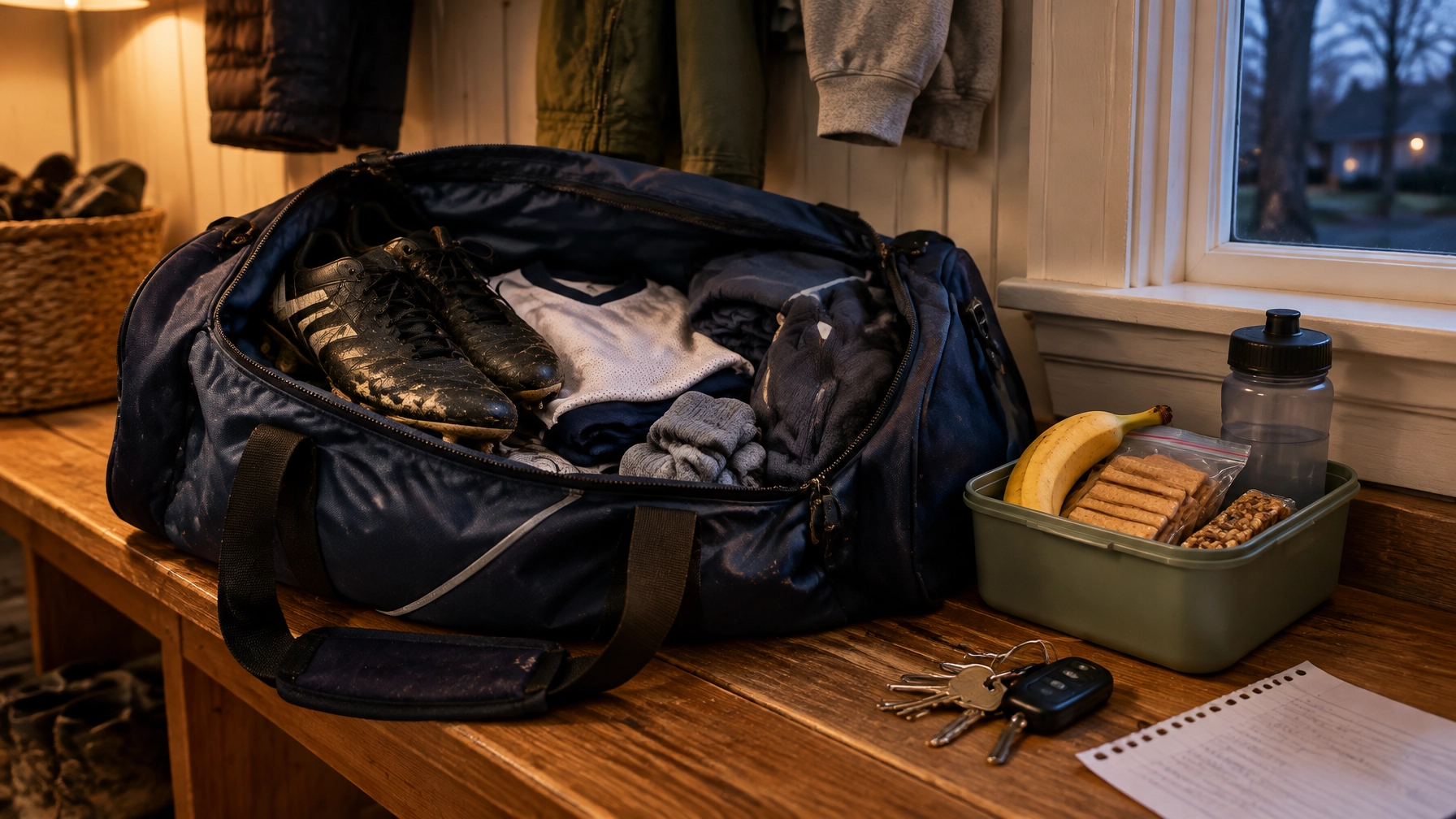
The gear bag is more than a place for cleats. It’s a vote for a less frantic morning.
When the bag is packed, the kids can help check it. Shoes? Yep. Jersey? Yep. Extra socks? They’re in the side pocket. Even little jobs count. And when a kid remembers their own water bottle, that’s one less thing for a parent to carry in their head.
Then there’s the snack bin.
Every family has its reliable choices: crackers, fruit, a granola bar, maybe something that won’t melt in the car. The backup snack matters because plans stretch. The game runs late. A sibling gets hungry before halftime. The drive home takes longer than expected because someone spotted a friend in the parking lot.
That backup isn’t a grand strategy. It’s just a small kindness to your future self.
“We leave at 9 or we don’t go”
This rule can sound harsh if you say it the wrong way. In practice, it can make the morning kinder.
Pick a departure time and agree on it. If the plan says “we leave at 9,” then 9 is the time, not 9:18 after a round of searching, renegotiating, and asking if everyone is ready yet. The boundary is simple. So is the benefit: nobody has to guess how long the morning can drift.
That doesn’t mean every family has to be early, or that a late start ruins the day. It means making one clear call before the pressure arrives. When everyone knows the plan, there’s less bargaining and more time to settle into the car.
And if the family isn’t ready? Sometimes we miss the activity. It happens. The point isn’t perfection. It’s that one decision can save everyone from spending the whole morning arguing about five smaller ones.
A small-town Saturday has its own rhythm
The best part of the day often isn’t on the schedule.
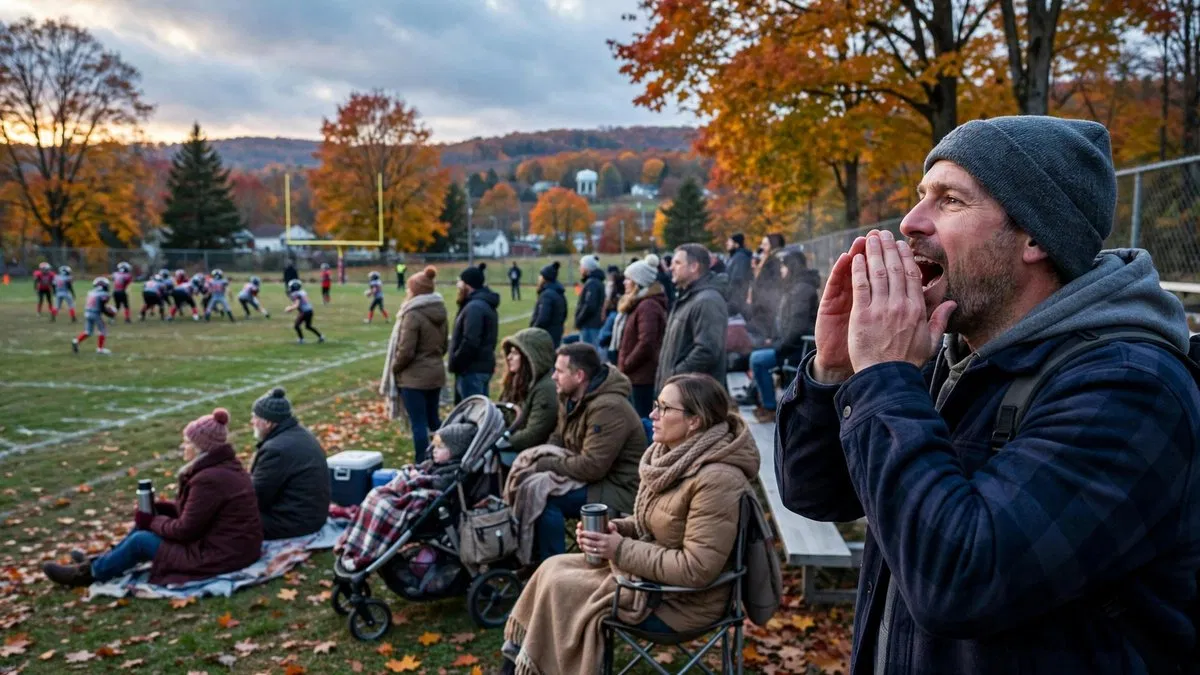
It’s the kid who waves from the other team. It’s spotting a neighbor on the sideline. It’s the five-minute stop after the game that becomes a little longer because there’s a story to hear and nobody is in a hurry to leave. These moments don’t need to be optimized. They need a little space to happen.
That space is one reason the quiet planning matters. When the basics are handled, we’re less likely to spend the day thinking about what we forgot. We can watch the game. We can listen to the kids. We can enjoy the town we live in instead of rushing through it.
There’s no need to plan every hour. One activity and a clear way to get there may be plenty. Keep the rest open. A calm Saturday isn’t a perfectly executed itinerary. It’s a day with enough structure to feel steady and enough room to feel like a day off.
Let the kids carry a little of the plan
A routine gets easier when it belongs to more than one person.
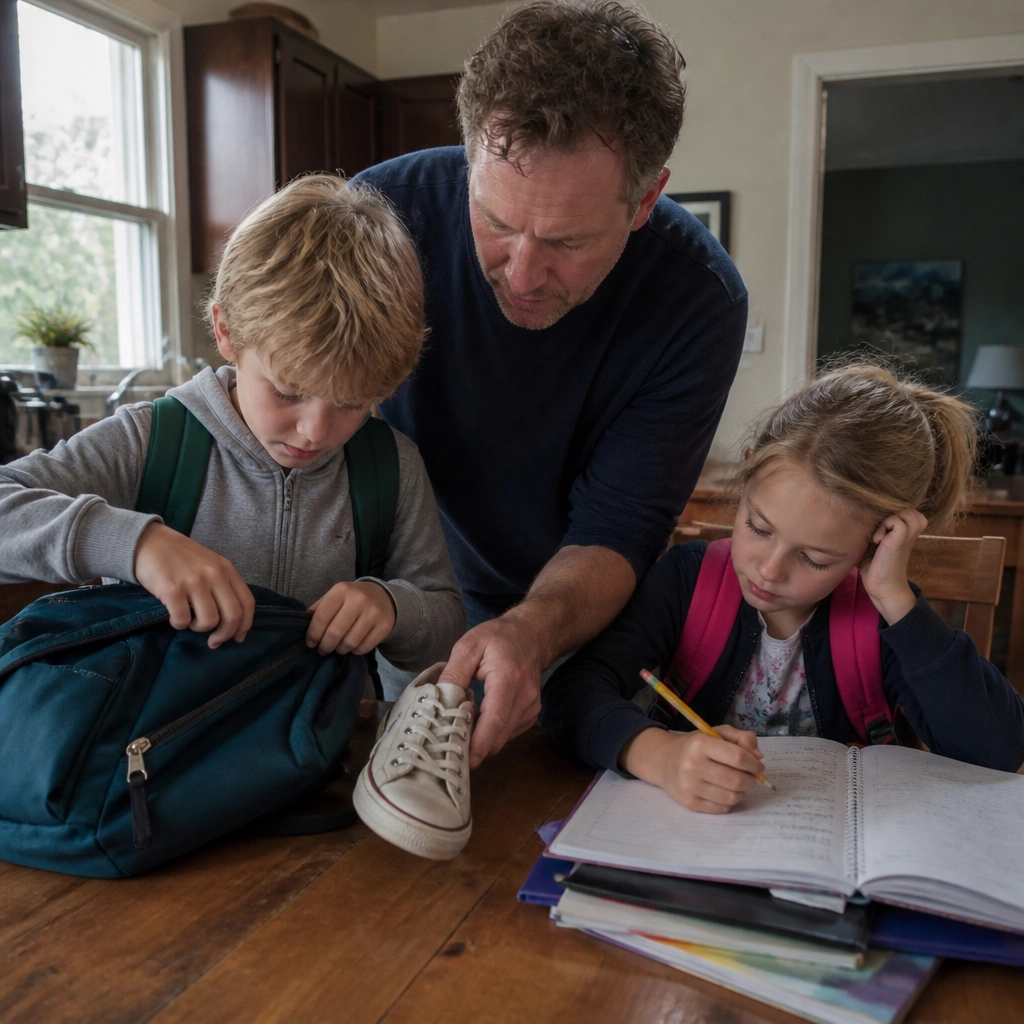
Kids can choose their socks, put their shoes in the bag, or check that the snack they want is packed. They may not remember every time. That’s fine. The point is to let them take part in making the morning work.
It’s also a reminder that the invisible work doesn’t have to stay invisible. When we name the small jobs, we give everyone a chance to help. And when a kid takes ownership of one part of the routine, they get to feel the satisfaction of being ready.
The plan is there to make room for the day
A good shift plan keeps the important things covered and leaves room for the unexpected. A family Saturday can work the same way.
The bag is packed. There are snacks. Everyone knows the leave time. The rest can unfold. Maybe the game is cold. Maybe the afternoon is sunny. Maybe someone forgets a water bottle anyway. We’re parents, not magicians.
When the basics are covered, a small hiccup stays small. We can handle the forgotten bottle, laugh about the extra snack, and get on with the day. That’s the whole point, not to eliminate every surprise, but to make sure the surprises don’t run the show.
The best plans don’t ask us to be more productive with our family time. They help us be more present in it.
The calm was never the absence of a plan. It was the plan working quietly enough to feel like a Saturday.
Frequently Asked Questions
What should we pack for a kids’ Saturday activity?
Start with what the activity requires: uniform or clothes, shoes, water, and any required gear. Add a layer for the weather, extra socks, and one or two familiar snacks. Keep the list simple enough to reuse.
How can we make Saturday mornings less stressful?
Move a few decisions to the night before. Confirm the start time and location, pack the bag, set out clothes, and choose a departure time together. A short routine is easier to keep than an elaborate one.
What if we still forget something?
It happens. The plan is there to reduce avoidable scrambling, not to guarantee a perfect day. Take care of what you can, make the best of what you can’t, and keep the good parts of the day in view.