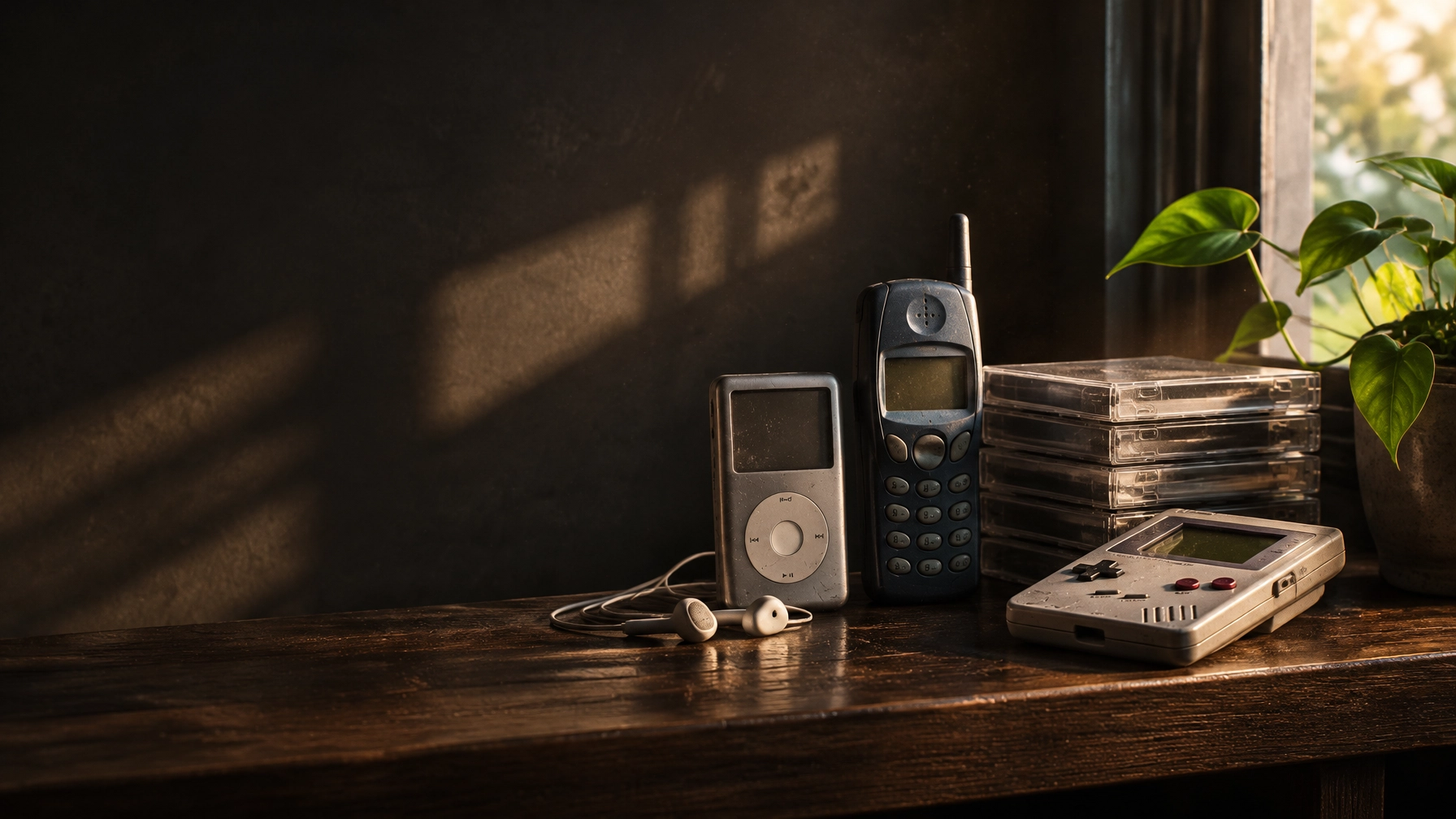
A brand is more than the thing it sold
A brand is a promise people recognize. It’s also a collection of small experiences: the sound a device made when it turned on, the ritual of choosing a movie, the thrill of signing up for a new account, the feeling that a product belonged to your particular moment in time.
When a brand fades, those details don’t necessarily fade with it.
That is why brand endings deserve more thought than a quiet announcement and a logo moved to an archive. As Marketing Week has argued, marketers spend plenty of time thinking about launches and growth, and much less time thinking about what happens when a brand reaches its end.
We get it. Nobody builds a business hoping to write its goodbye. But an ending doesn’t erase what the brand meant to people. It just changes what can happen next.
A business can close. A memory doesn’t need permission to stay open.
Nostalgia is a feeling. The opportunity is what we do with it.
Nostalgia has a pull because it connects the past to the person we are now. A song, an old interface, or a familiar object can bring back a place and a version of ourselves in a flash.
Research on nostalgic marketing and consumer decisions explores that connection between memories, a sense of continuity, and how people feel about brands. It gives us a useful way to think about why an old name can still matter: it may stand for a time, a community, or a habit, not just a product.
But a good memory is not the same thing as a reason to buy. Nostalgia can get someone to stop scrolling. It can make them smile, tell a story, or send a link to a friend. Then comes the harder question: does the idea still have a place in their life today?
That’s where many nostalgia plays hit the brakes. A reference can be clever and still feel like a costume. A familiar name can spark recognition without offering anything people want now. Nostalgia works best when it carries the past forward instead of asking the past to do all the work.
The old feeling matters. So does the new reason to care.
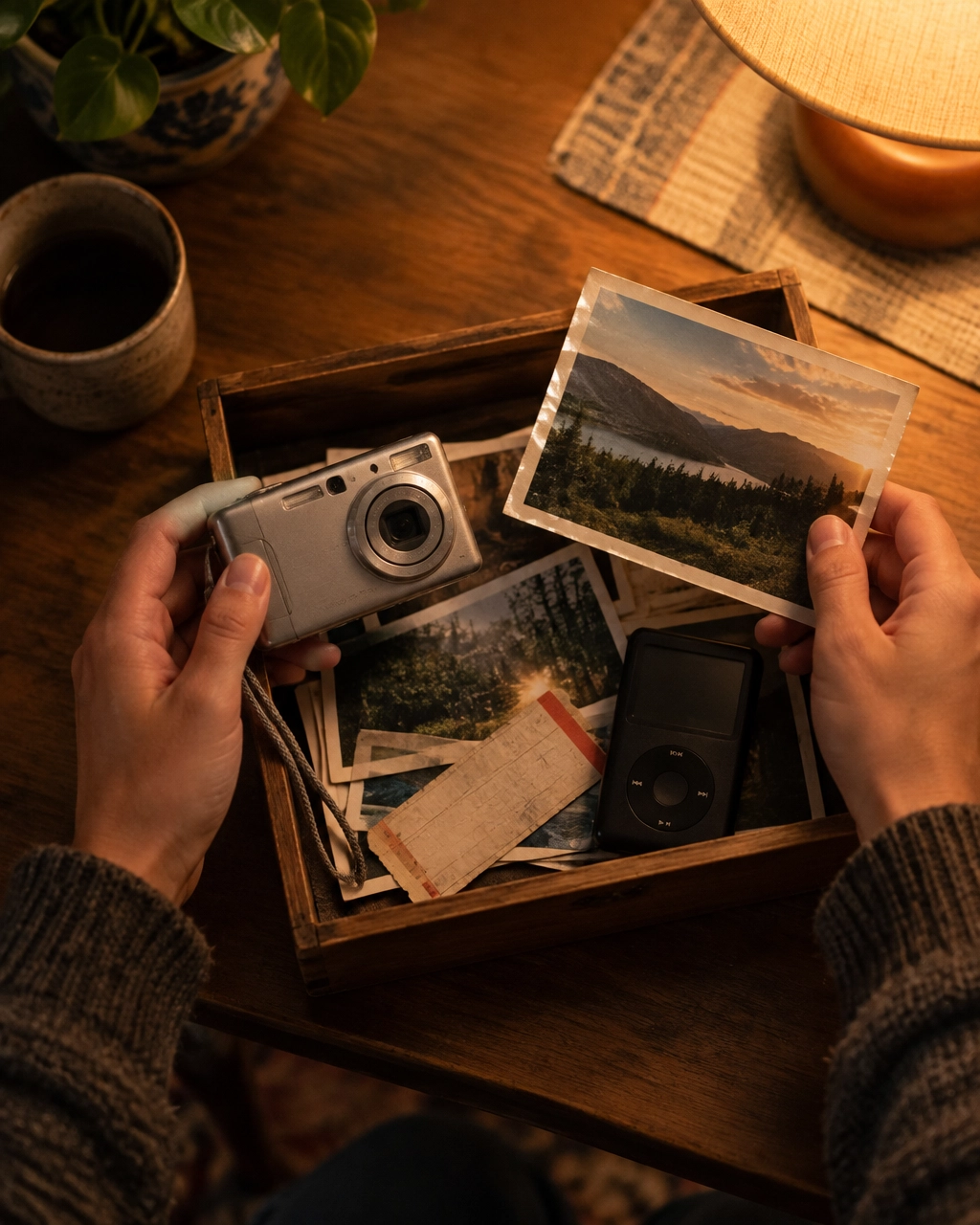
The memory becomes the merchandise
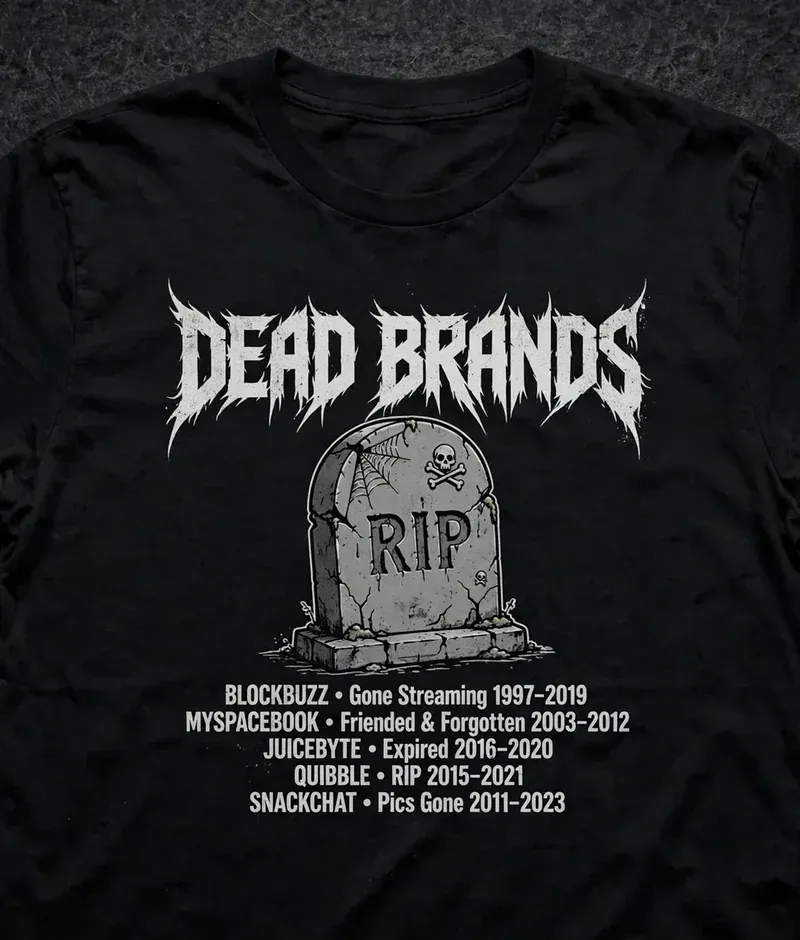
That’s one reason Dead Brands’ gravestone tee makes sense to us. It takes a familiar cultural idea, the parade of tech and media brands people remember, and gives it a playful, wearable form.
The names on the shirt are legally distinct parodies. The point isn’t to claim that they’re real companies or official histories. The point is the feeling: we recognize the kind of brand being remembered, and we can laugh at how quickly a once-familiar thing can become a piece of lore.
A shirt can’t bring back a service, rebuild a community, or recreate the first time we used a product. It can do something smaller, and still meaningful. It can give people a way to carry the joke, memory, and conversation with them.
That is the living market in nostalgia: not just a chance to sell something old, but a chance to help people express what they remember. A T-shirt, a collectible, or a limited-edition object can turn an inside joke into something people wear and talk about.
The trick is knowing what people miss
When a brand disappears, we can ask a more useful question than “Could we bring it back?”
We can ask: what part of it do people actually miss?
- The product? Maybe the object did something people still need.
- The ritual? Maybe the experience mattered as much as the result.
- The look and feel? Maybe its design became shorthand for a particular era.
- The community? Maybe the brand gave people a place to find one another.
- The joke? Maybe people remember it because laughing about it is part of the fun.
Those answers point in different directions. A loved ritual might inspire a new experience. A distinctive visual identity might have a second life as merchandise. A community may want a place to gather, even if the original product is gone.
Or the answer might be that people miss the memory, and nothing more. That is fine too. Not every brand deserves a full resurrection. Sometimes the honest afterlife is a story, a shirt, or a grin when the name comes up.
As researchers studying near-dead brands have explored, the space between active life and disappearance can be its own cultural territory. We find that idea less spooky than it sounds. It’s the familiar glow of something no longer here, but not entirely forgotten.
Every funeral is a chance to remember
We don’t think every brand should come back. Some things had their run. Their ending is part of their story, and trying to reverse it can make the story less interesting.
But we also don’t think a brand’s value vanishes on the day its business does. People keep the memories. They quote the slogans, describe the old rituals, and tell the “you had to be there” stories. Sometimes they want to wear a small piece of that history, preferably without pretending the past was perfect.
That’s the spirit behind Dead Brands. We’re drawn to the names and ideas that left a mark, even when the original thing is gone. Our gravestone tee gives those memories a place to rest, and gives the rest of us something to smile about.
Every brand gets a funeral. Not every funeral is the end.
Frequently Asked Questions
Why do people connect with brands that no longer exist?
Because brands can become attached to routines, relationships, and important moments in people’s lives. The memory can remain meaningful even after the product or company is gone.
Can nostalgia help a brand live on?
It can help bring a brand or its history back into conversation. But nostalgia works best when there’s a fresh, relevant way for people to engage with it, not just a reminder of what used to be.
What does Dead Brands’ gravestone tee represent?
It’s a playful tribute to the afterlife of tech and media brands. The shirt uses legally distinct parody names to capture how products that once felt everywhere can become part of our shared nostalgia.