The honest picture, minus the hype
Every conversation about AI at work seems to swing between two movies. In one, the robots take every job by Friday. In the other, nothing ever changes and it is all a fad. I run a small company with AI agents working in it every day, and I can report the truth is much less cinematic: it is a back office that never sleeps, never gets bored, and never once complains about filing the same report it filed yesterday.
Here is what a normal day actually looks like.
Morning: the overnight report is already written
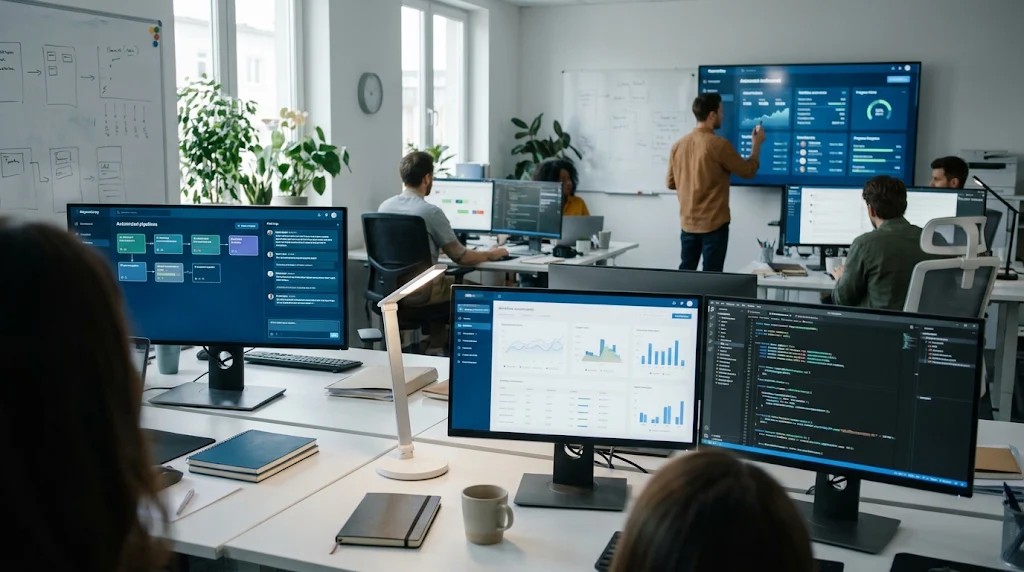
While I sleep, agents watch the things that break quietly. A website page that stops loading. A queue that stops moving. A stream that drops. By the time I am making coffee, there is a short summary waiting: what ran, what failed, what fixed itself, and the two or three things that genuinely need a human.
This used to be my job, at midnight, after the kids were down. I did it badly and resentfully, the way everyone does work that is beneath their pay grade and above their energy level. The agents do it cheerfully because cheerful is not a setting they have to manage. They just check, log, and report. The value is not genius. The value is that it happens every single night, including the nights I would have skipped.
Daytime: drafts, checks, and the work between the work
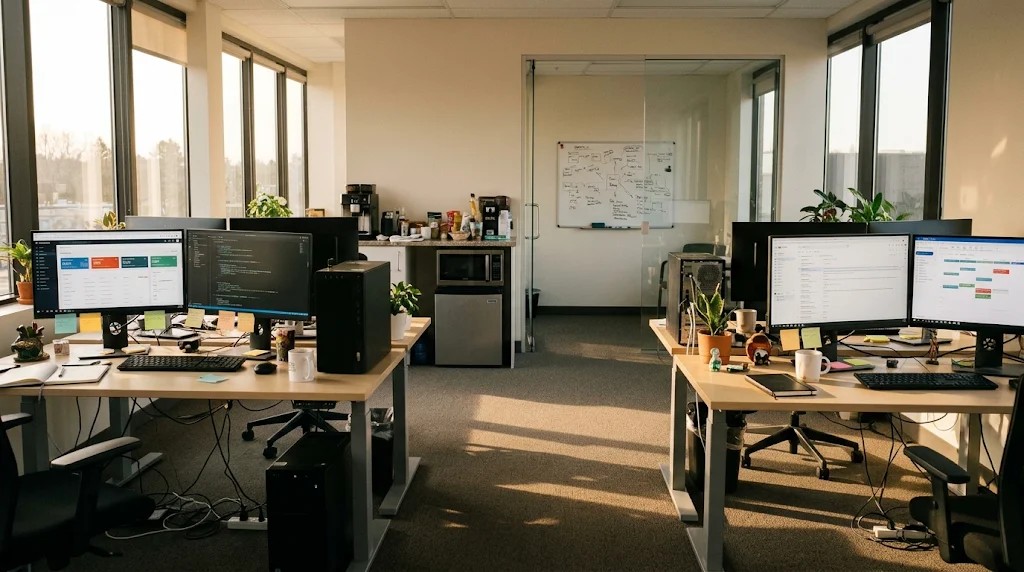
During the day the agents mostly produce first drafts and verification passes. A blog post draft appears for review. A social post gets written in the voice we documented, then checked by a different agent against the rules: no banned phrases, no invented numbers, links present, format right. Research gets gathered and summarized before I ever see it, with sources attached so I can spot check instead of starting from zero.
Notice the pattern. Draft, then check, then a human decides. The agents are fast and literal, which makes them excellent at checklists and first passes. They are not the ones who decide whether an idea is good, whether a client email has the right tone for a delicate situation, or whether we should take a job at all. Those calls stay with people, because those calls are the business. Everything around those calls is logistics, and logistics is where small companies bleed hours.
Evening: the queues get tucked in
At night the agents do the work I call tucking in. Content gets scheduled for the morning. Reports get filed where the team will find them. Open items get a nudge or a note so tomorrow starts with a list instead of a scavenger hunt. If something is stuck, it is stuck in writing, with a name on it, not stuck in my head at 2 a.m.
That last part is the one nobody puts in the sales pitch, and it might be the biggest one. A small business owner carries the whole operation in working memory. Every unfinished thing hums. Handing the humming to a system that writes it down, watches it, and reports on it is not an efficiency gain. It is a sleep gain. Those are not the same thing, and the second one is worth more.
Frequently asked questions
Does this mean you need fewer people?
It means the people I work with spend their hours on work that uses a person properly: relationships, judgment, craft, sales conversations, the things with a pulse. The agents took the watching, drafting, checking, and filing. In a small company that trade is not about headcount. It is about the founder no longer being the entire night shift.
What do the agents get wrong?
Plenty, and anyone who tells you otherwise is selling something. They can be literal to a fault, confident when they should be careful, and blind to context a human would catch instantly. That is why the workflow is draft, check, human decides, and why every agent's work gets verified before it counts. Trust is built per task, with receipts, not granted by brochure.
Is this only for tech companies?
The work being automated here is not tech work. It is inbox watching, report filing, content drafting, queue checking, and follow up. Every small company I know drowns in exactly that list, whether it sells software or plumbing supplies. If your evenings are full of other people's paperwork, your company has the raw material for this, whatever industry you are in.
Where would a small company even start?
Start with one recurring report you hate. The one you produce every week, from the same sources, in the same format, that eats an evening and teaches nobody anything new. Automate the gathering and the first draft of that single report, keep your own eyes on the final version, and learn the workflow on something low stakes. Then pick the next one. That is how we built the whole thing: one hated report at a time.
Not a takeover, a night shift
The AI workforce at my company did not arrive with a speech about the future. It arrived as a solution to a specific problem: I was the only one watching everything, and I was running out of evenings.
Now the watching gets done, the drafts get drafted, the checks get checked, and the humans get to be the humans. That is the whole revolution from where I sit, and it fits in a kitchen, after bedtime, with the house finally quiet.