Two meetings, one table
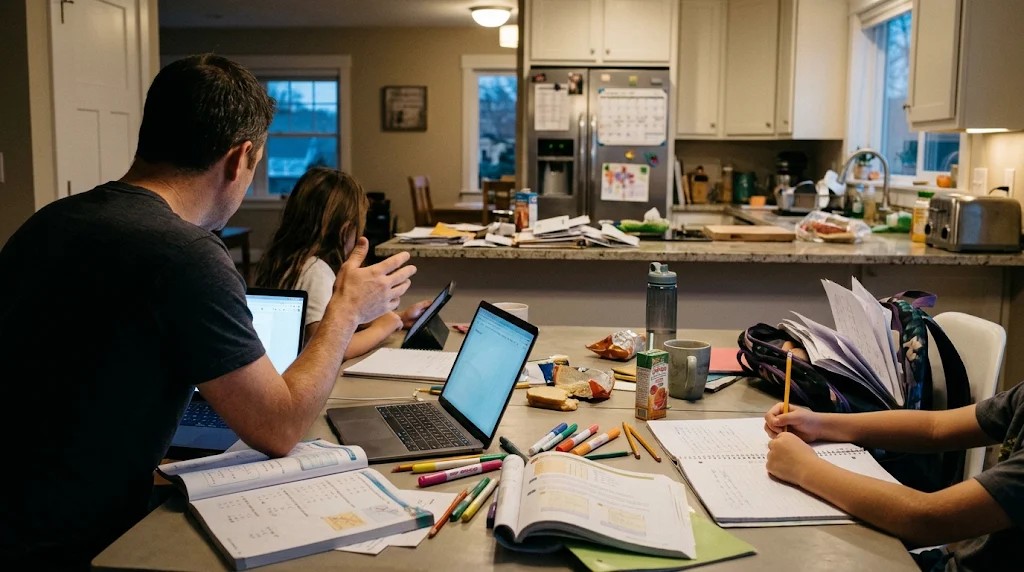
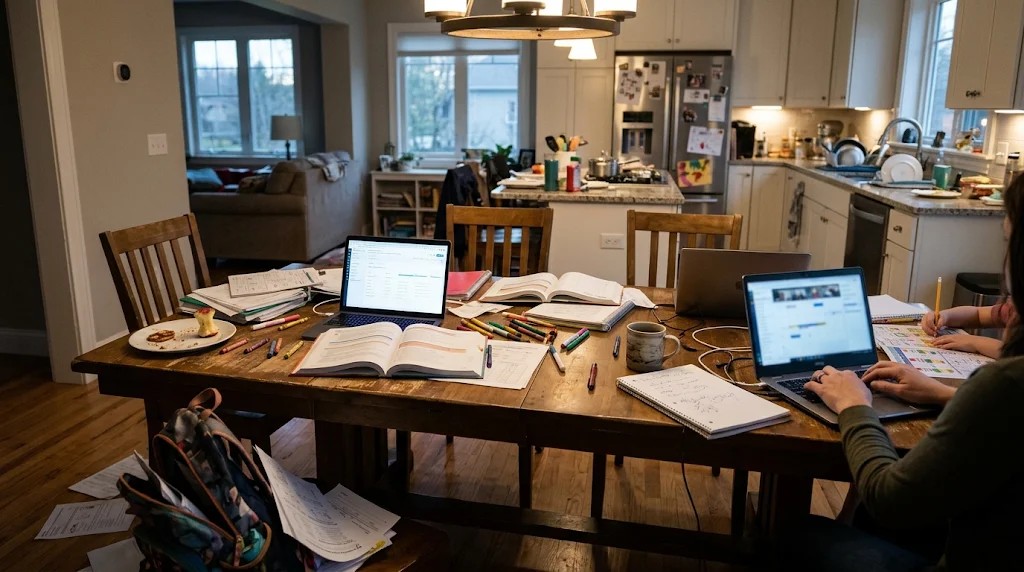
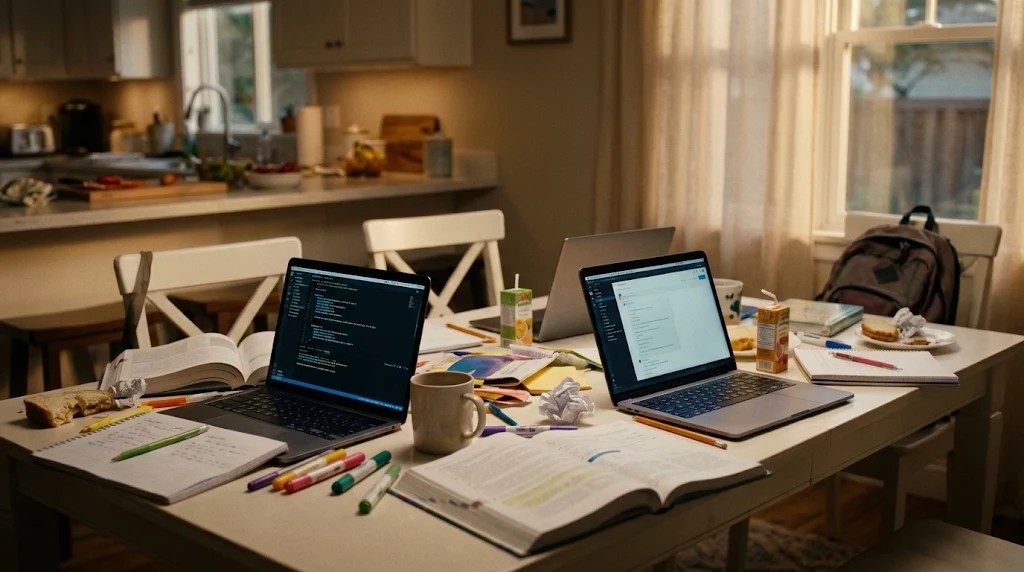
My day has a rhythm I did not plan. There is the morning standup with the team, screens on, coffee going cold, everyone reporting what shipped and what is stuck. And there is the evening standup at the kitchen table, where my daughter has a math worksheet, my son has reading to get through, and I am the facilitator whether I applied for the job or not.
Somewhere along the way I noticed the evening meeting was better run than the morning one. Not because my kids are project management prodigies. Because the kitchen table has rules that workplaces talk about and rarely keep.
Rule one: it is short because dinner is real
A standup that runs long at work is an annoyance. A homework session that runs long at home collides with dinner, baths, and the hard wall of bedtime. The deadline is not a calendar block. It is a nine year old losing structural integrity.
So we keep it tight. What are you working on. Where are you stuck. What is the next thing you are going to try. That is the whole agenda, and it turns out that is the whole agenda of every good meeting I have ever been in. The work version adds slides. The slides are not an improvement.
Rule two: blockers get said out loud, early
Kids are honest about being stuck in a way adults are trained not to be. My son will announce to the entire kitchen that problem four makes no sense. No hedging, no status theater, no pretending the worksheet is going fine while quietly drowning.
At work, blockers hide. People say "making progress" about things that have not moved in a week, because admitting a blocker feels like admitting a failure. At the kitchen table, the blocker is just information. Problem four makes no sense is the start of solving problem four. I started saying it that plainly in my own standups, about my own work, first. Funny how fast a room gets honest when the person running it goes first.
Rule three: one next step, written where we can see it
Homework hour ends with the smallest possible plan. Not "finish the chapter." More like "do problems five and six, then check the example at the top of the page." Small enough to start without a pep talk.
I run my business the same way now. The giant project plan lives in a document somewhere, sure. But what actually moves my companies is the whiteboard version: the next visible step, small enough that nobody has to psych themselves up to begin it. Big goals are for direction. Tiny next steps are for Tuesday.
Rule four: nobody performs
Here is the one I think about most. My kids do not do status updates for an audience. There is no performing competence at the kitchen table. If the reading is hard, the reading is hard, and we just work on the reading.
Work meetings collect performance the way a lint trap collects lint. Half the updates I have sat through in my career were people narrating how busy they are, which is a different activity from telling the team what is true. The kitchen table cured me of enjoying that. I would rather hear "I got nothing done and here is why" in thirty seconds than a five minute highlight reel. The first one I can help with. The second one is just weather.
Frequently asked questions
Do your kids know they are in a meeting?
Absolutely not, and the system depends on it. The second homework hour gets a name, an agenda doc, and a recurring invite, it dies. It works because it is just Dad at the table with a pencil, helping. I am the only one who knows there is a format. That is fine. Most good formats are invisible.
What do you do when homework hour goes sideways?
Same thing I do when a workday goes sideways: shrink the goal and protect the ending. If the worksheet is a war zone, we do the three problems that matter and the rest gets a note to the teacher and a fresh start tomorrow. A meeting that ends on time with a small win beats a heroic slog that ends in tears, at every age I have tested so far.
How does this fit with running a business at night?
It is the boundary, honestly. Homework hour is the meeting I do not move, do not take calls during, and do not shorten for a client fire unless the building is actually burning. My clients get a better version of me because that hour is protected. A business that eats every evening eventually eats the dad too, and then it has neither.
What is the actual lesson for my team?
Steal the rules, skip the metaphor. Keep standups short with a real deadline. Say blockers first and plainly. End with one next step small enough to start immediately. And when you catch yourself performing instead of reporting, remember that a nine year old with a math worksheet has better meeting discipline, and act accordingly.
The meeting I never cancel
I have cancelled a lot of meetings in my career and regretted almost none of it. The kitchen table one is not on the list. It is short, it is honest, it ends with a plan, and the attendees think it is just homework.
Best run meeting of my day, five nights a week.