
Start with the pain that costs money this week
Forget the org chart. Ask one question: where does the business lose money or hours right now, this week, in a way everyone can point at? For most small teams it is one of three places. Quotes live in somebody's inbox and follow-up is luck. Invoices go out late because billing is a Friday chore. Or nobody can answer "how many do we have" without walking to the shelf.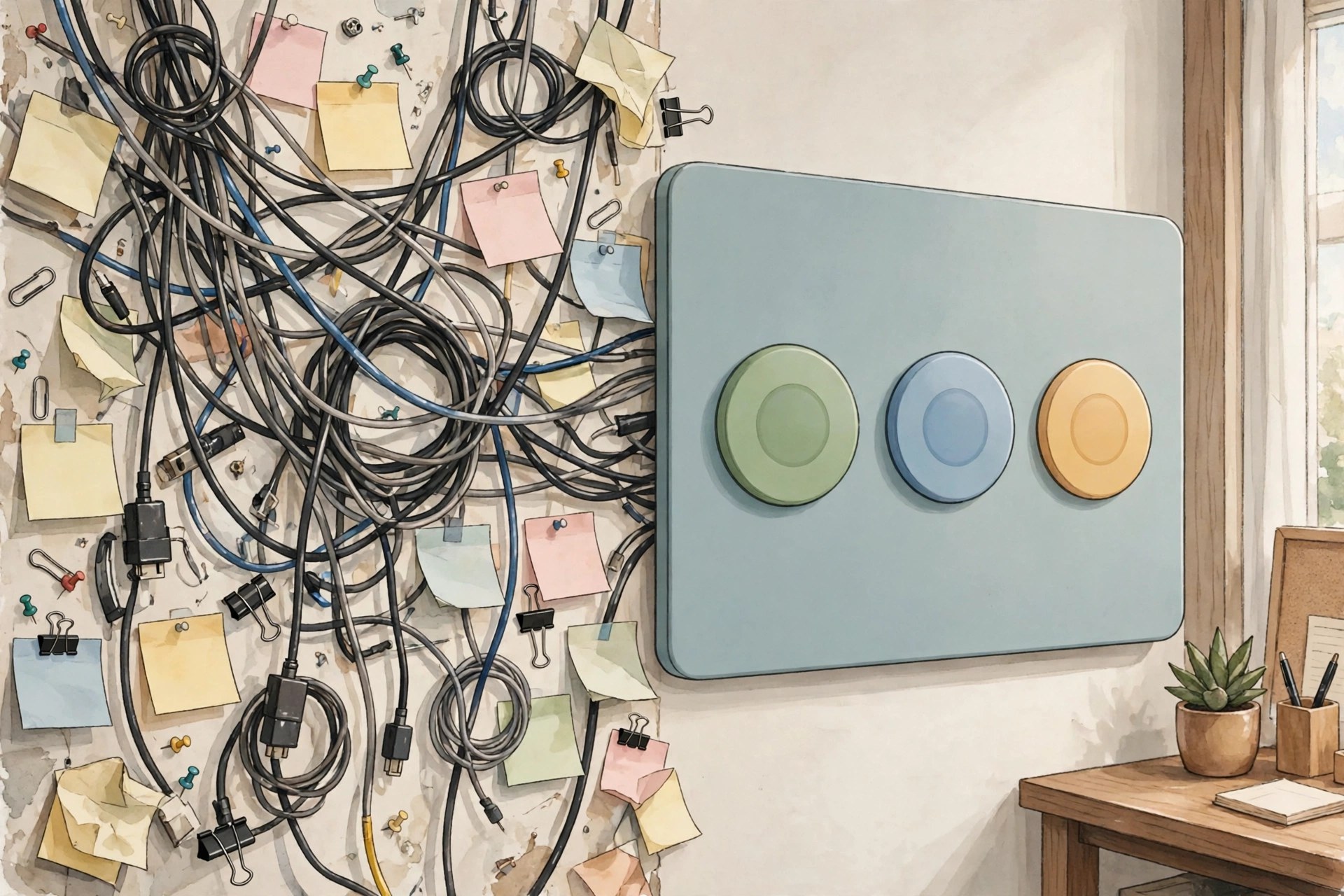
That answer picks your first module. Not the demo, not the brochure, not the app with the prettiest icon. Odoo is modular, which is its superpower and its trap: the modules are all right there, begging to be switched on. Discipline is the implementation.
The first four, in order
Contacts first, because everything hangs off them. One record per customer and vendor, duplicates merged, the fields your team actually uses and no more. A dirty contact list poisons every module you bolt on later, and a clean one takes days, not months.
Sales second, mirroring the flow you already have. Quote, confirm, deliver, invoice. If your team sells from a whiteboard today, the Odoo flow should look like that whiteboard for the first month. You are not redesigning the business. You are giving the existing business a memory.
Invoicing third, same-day as a rule. The win is not accounting elegance. The win is an invoice leaving the building the day the work ships, every time, without a heroic Friday. Cash flow notices boring reliability more than it notices features.
Inventory basics fourth, if you hold stock. One warehouse, real counts, reorder rules for the items that actually run out. Count your A items first and count them weekly until the system and the shelf agree. Trust is built in counts, not in configuration screens.
What to leave for later, deliberately
Manufacturing, HR, marketing automation, the website builder, advanced accounting migrations: all good, all later. Every module you postpone is a module your team does not have to learn while it is still learning the first four. Write the later list down, date it, and show it to the team, because "later" with a date is a plan and "later" without one is a broken promise.
The other thing to leave for later is customization. Run the standard flow for a full month before you ask for a single change. Half the changes teams request in week one are requests to recreate the old broken process inside the new tool. A month of standard flow tells you which changes are real needs and which were just habits wearing a costume.
The overhead is not the software
Here is the honest part. The overhead small teams fear, the training, the data cleanup, the "we are too busy for a rollout," is not caused by Odoo. It is caused by scope. A four-module phase one is a few weeks of part-time attention and a team that still recognizes its own business at the end. A twenty-module phase one is a second job.
Start small, make it boring, make it stick. Then earn phase two. That is Odoo without the overhead, and it is the only version of this advice I have ever seen survive contact with a real small team.
Frequently asked questions
Which Odoo modules should a small team install first?
Contacts, Sales, Invoicing, and Inventory if you hold stock, in that order. Each one fixes a weekly money or hours leak, each is understandable in a day, and together they give the business one shared memory for customers, orders, bills and stock.
How long does a lean first phase take?
Plan on a few weeks of part-time attention: days to clean contacts, a week to mirror your existing sales flow, then live invoicing and counted inventory. The calendar stretches when scope creeps, not when the software is slow.
Should we customize Odoo to match our current process?
Not in the first month. Run the standard flow, then separate real needs from old habits. Customizing in week one usually rebuilds the broken process you bought the software to escape.
When do we add more modules?
When the first four are boring: used daily, trusted by the team, and nobody is keeping a shadow spreadsheet. That is the signal phase two will land. Add one module at a time, with a date and an owner.