The Monday morning stockout
Monday, 6:45 AM. I'm half-awake, the kids need to be up in twenty minutes, and I reach for the coffee on autopilot. Empty bag. Not "low" -- empty. The kind of empty where you tilt it and a single bean rolls out like it's mocking you.
The backup bag? Also empty, because past-me assumed present-me would remember to buy more. Past-me is an idiot. Present-me is an idiot running on no sleep and no caffeine, which is worse.
This is a stockout. In my professional life, I charge clients real money to prevent exactly this -- stockouts in warehouses, in retail, in distribution. I've built reorder systems, safety stock models, and cycle count programs for companies doing $50M a year. And I got taken down by a $12 bag of coffee.
Here's what my kitchen taught me about the inventory basics everyone skips -- including, apparently, me.
The reorder point is not "when it's empty"
Every warehouse I've ever walked into has this problem: the reorder point is effectively zero. Nobody reorders until the shelf is bare, and then it's an emergency PO, expedited freight at 3x cost, and someone on a call explaining to a customer why their shipment is two weeks late.
My coffee reorder point was "when I open the last bag." That's not a reorder point -- that's a crisis point with better branding.
The fix is embarrassingly simple: reorder when you START the last unit, not when you finish it. One bag in use plus one bag on the shelf equals never having a Monday morning disaster. In ERP terms, that's a reorder point of 1 with a safety stock of 1. In human terms, it's "buy coffee when you open the second-to-last bag, genius."
I tell clients to set reorder points based on average daily usage times lead time, plus a buffer. My household coffee consumption: roughly one bag every 9 days. Store trip lead time: anywhere from 1 to 5 days depending on how chaotic the week is. So the math says reorder when I have about half a bag left. I now have a line on the bag. When the coffee hits the line, "coffee" goes on the list. It took a Sharpie and eleven seconds.
Safety stock exists because life has lead times
Safety stock is the extra you keep because suppliers are late, demand spikes unexpectedly, or -- in my case -- you forget to go to the store for four straight days because life happened.
Businesses resist safety stock because it "ties up cash." I get it. Nobody wants money sitting on a shelf. But here's the thing: the carrying cost of one extra bag of coffee is about $0.03 per day. The stockout cost me a ruined morning, a drive-thru detour that made me late for a client call, and $6.50 for a coffee that wasn't as good as mine.
I resisted backup coffee for the same reason my clients resist safety stock: "I'll just grab some tomorrow." Then tomorrow had a dentist appointment, a school pickup across town, and a client call that ran 40 minutes long. Lead time: 4 days. Demand during lead time: desperate and non-negotiable. Safety stock would have cost me $12. The stockout cost me a morning and my dignity.
Every time a client tells me they "don't need safety stock, our supplier is reliable," I now think about that Monday. Their supplier is reliable right up until it isn't, the same way my "I'll go tomorrow" plan was reliable right up until the dentist appointment.
Cycle counting beats the annual panic
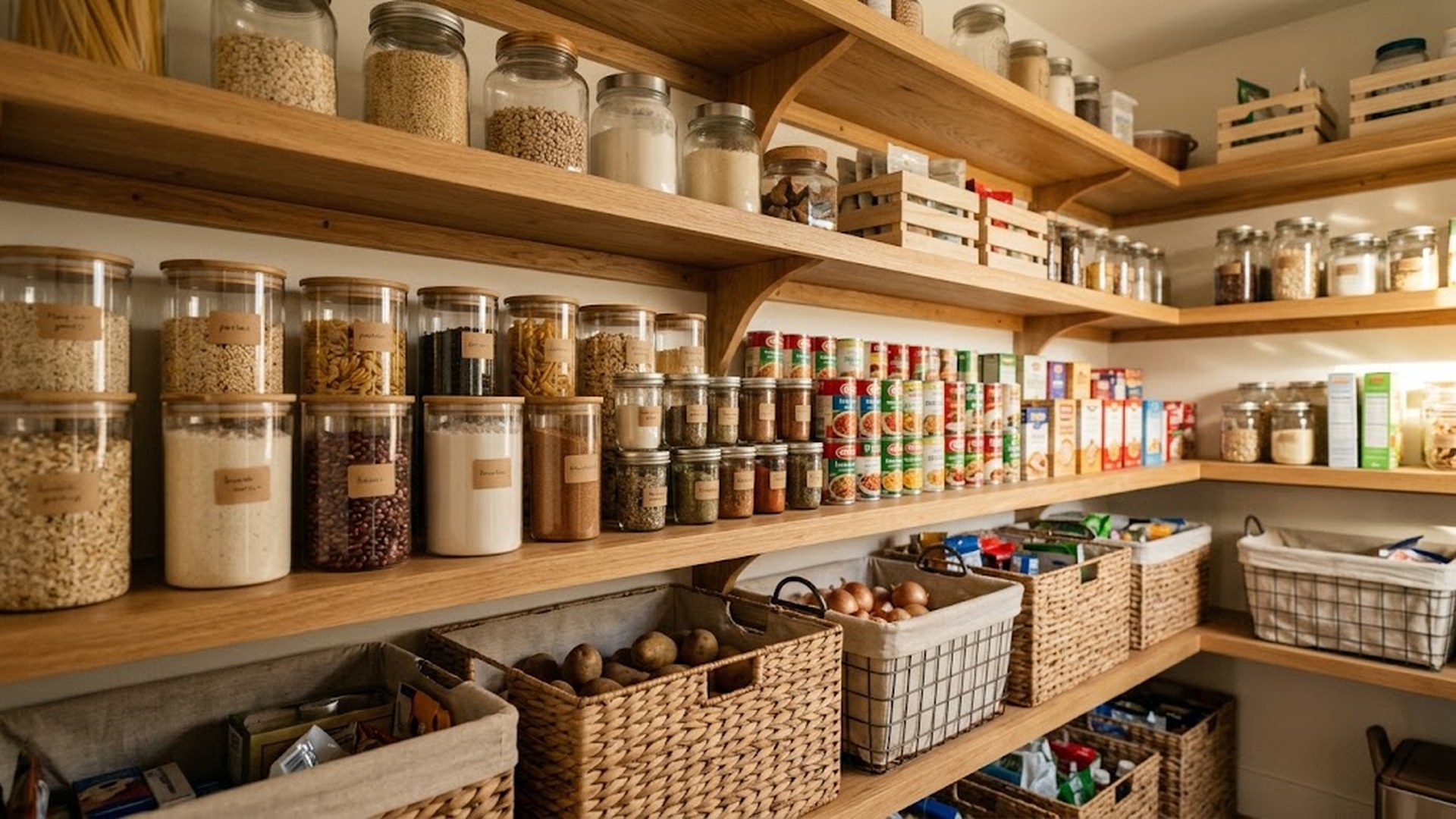
Once a year, I do the Big Pantry Cleanout. I find cans that expired in 2024, spices from a cuisine I attempted once in 2022, and something in the back that I choose not to identify. That's the home version of the annual physical inventory -- disruptive, depressing, and it always surfaces problems that have been quietly festering for months.
Warehouses that cycle count -- checking a small rotating subset of items every day instead of everything once a year -- catch problems while they're small and fixable. A missing case of product discovered on a Tuesday is a reorder. The same case discovered during annual inventory in December is a write-off and a mystery.
I started doing a 30-second pantry scan every Sunday night. Milk? Eggs? Coffee? Bread? Butter? It takes less time than finding my keys, and I haven't had a stockout since I started. The annual cleanout still happens, but now it's boring -- fifteen minutes, nothing expired, nothing mysterious. Boring is exactly what you want an inventory count to be.
One of my clients cut their annual inventory shutdown from 3 days to 4 hours by switching to daily cycle counts. My pantry went from a yearly archaeological dig to a non-event. Same principle, wildly different scale, identical result.
The grocery list is a purchase order (treat it like one)
A purchase order has three jobs: say WHAT you need, HOW MUCH you need, and WHEN you need it. My old grocery list said "coffee." That's not a purchase order -- that's a wish whispered into the void of a refrigerator door.
My new list says "coffee x2 (1 in use, 1 safety stock), needed by Friday." Specific. Quantified. Dated. My 9-year-old saw it and asked if I'd lost it. My clients would recognize it instantly -- it's literally what I put in every PO template I build for them.
The vague list also caused overbuying, which is the other inventory sin. "Were we out of pasta?" I don't know, the list just said "pasta?" with a question mark. So I'd buy three boxes. Now we had four. That's excess inventory carrying cost -- my pantry was tying up cash in durum wheat futures.
Specificity fixed both directions. The list now prevents stockouts AND overstock. Which is, not coincidentally, exactly what a good PO does.
The unsexy truth
I fix inventory problems for a living and still ran out of coffee on a Monday morning. The systems aren't complicated -- reorder points, safety stock, cycle counts, clear purchase orders. A fifth-grader could understand every concept in this post.
The hard part was never the math. The hard part is doing the boring, specific, unsexy work consistently when no one's paying you to do it and no auditor is checking. That's true in a $50M warehouse and it's true in my kitchen.
Start with the coffee. Everything else follows.